The Difference Having a Professional on Your Side Makes

The Difference Having a Professional on Your Side Makes

In today’s fast-paced world, where answers are a Google search away, there are some who may wonder what the benefits of hiring a real estate professional to help them in their home search are. The truth is, with the addition of more information, comes more confusion.

Shows like Property Brothers, Fixer Upper and the dozens more on HGTV have given many a false sense of what it’s like to buy and sell a home.

Now more than ever, you need an expert on your side who is going to guide you toward your dreams and not let anything get in the way of achieving them. Buying and/or selling a home is definitely not something you want to DIY (Do It Yourself)!

Here are just some of the reasons you need a real estate professional in your corner:

There’s more to real estate than finding a house you like online!

There are over 230 possible steps that need to take place during every successful real estate transaction. Don’t you want someone who has been there before, someone who knows what these actions are, to ensure you achieve your dream?

 You Need a Skilled Negotiator

In today’s market, hiring a talented negotiator could save you thousands, perhaps tens of thousands of dollars. Each step of the way – from the original offer, to the possible renegotiation of that offer after a home inspection, to the possible cancellation of the deal based on a troubled appraisal – you need someone who can keep the deal together until it closes.

What is the home you’re buying or selling worth in today’s market?

There is so much information out there on the news and on the internet about home sales, prices, and mortgage rates; how do you know what’s going on specifically in your area? Who do you turn to in order to competitively and correctly price your home at the beginning of the selling process? How do you know what to offer on your dream home without paying too much, or offending the seller with a lowball offer?

Dave Ramsey, the financial guru, advises:

“When getting help with money, whether it’s insurance, real estate or investments, you should always look for someone with the heart of a teacher, not the heart of a salesman.”

Hiring an agent who has his or her finger on the pulse of the market will make your buying or selling experience an educated one. You need someone who is going to tell you the truth, not just what they think you want to hear.

Bottom Line

Today’s real estate market is highly competitive. Having a professional who’s been there before to guide you through the process is a simple step that will give you a huge advantage!

Last Chance! Homes are a Bargain Compared to Historic Norms

Last Chance! Homes are a Bargain Compared to Historic Norms

A loaf of bread used to be a nickel. A movie ticket was a dime.  Not anymore. Houses were also much less expensive than they are now. Inflation raised the price of all three of those items, along with the price of almost every other item we purchase.

The reason we can still afford to consume is that our wages have also risen over time. The better measure of whether an item is more expensive than it was before is what percentage of our income it takes to purchase that item today compared to earlier. Let’s look at purchasing a home.

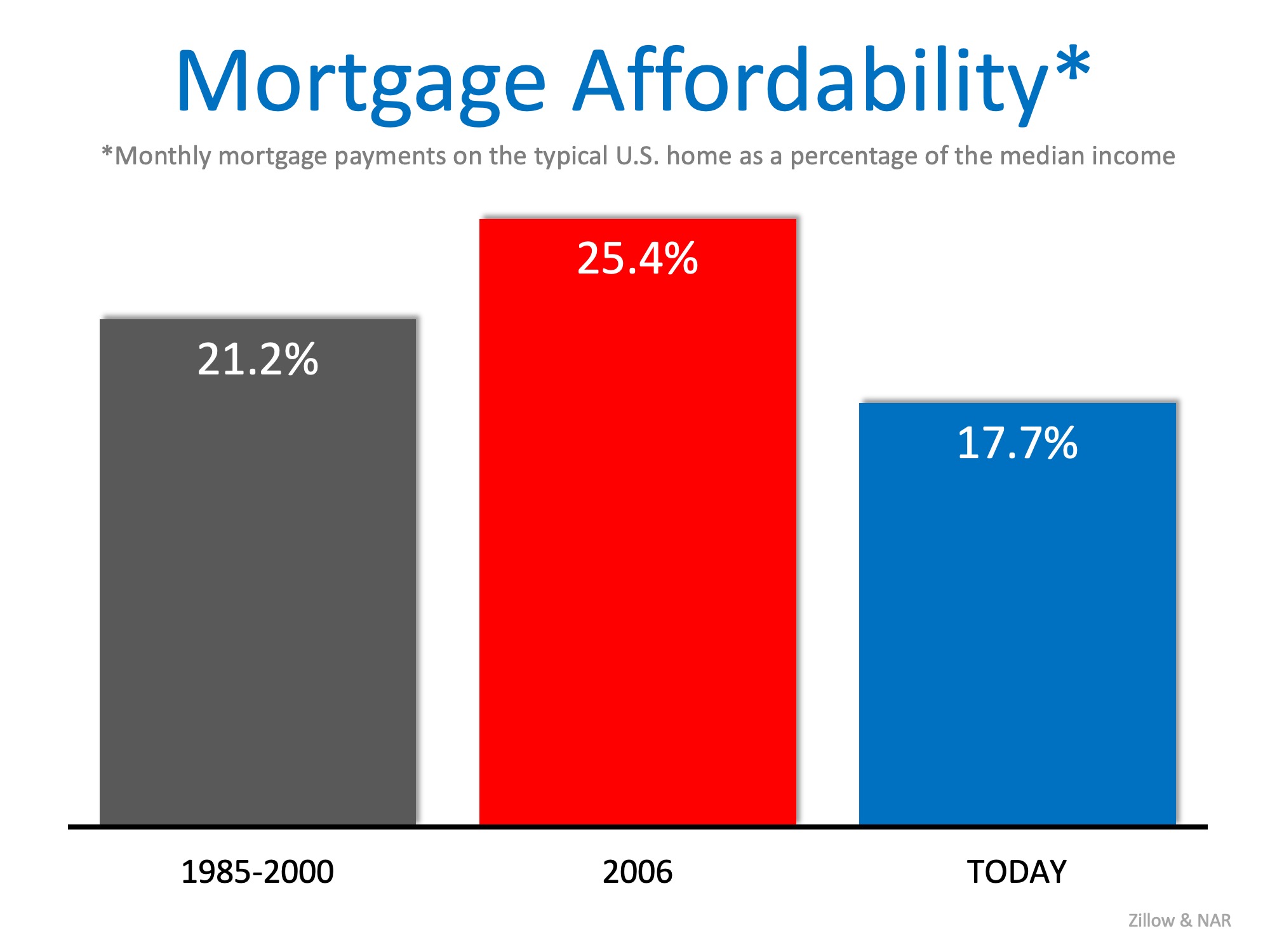
The COST of a home is determined by three major components: price, mortgage interest rate, and wages. The big question? Are we paying a greater percentage of our income toward our monthly mortgage payment today than previous generations? Surprisingly, the answer is no.

Historically, Americans have paid just over 21% of their income toward their monthly mortgage payment.

Though home prices are higher than before, wages have risen as well. And, the most important component in the cost equation – the mortgage rate – is dramatically lower than it was in the 1970s, 1980s, 1990s, and 2000s.

Today, according to the latest Home Affordability Index just released by the National Association of Realtors, Americans are paying 17.4% of their income toward their mortgage payment. That is much lower than the 21% average previous generations have paid.

Last Chance! Homes are a Bargain Compared to Historic Norms | Simplifying The Market

Bottom Line

The cost of purchasing a home today is a bargain compared to previous generations when we look at it from a percentage of income basis. However, with mortgage rates expected to increase and home prices continuing to appreciate, that will not always be the case. Whether you are buying your first home or looking to move-up to a more expensive home, purchasing sooner rather than later probably makes sense.

What is the Cost of Waiting Until Next Year to Buy? [INFOGRAPHIC]

What is the Cost of Waiting Until Next Year to Buy? [INFOGRAPHIC]

What is the Cost of Waiting Until Next Year to Buy? [INFOGRAPHIC] | Simplifying The Market

Some Highlights:

  • The cost of waiting to buy is defined as the additional funds it would take to buy a home if prices & interest rates were to increase over a period of time.
  • Freddie Mac predicts interest rates to rise to 5.1% by the end of 2019.
  • CoreLogic predicts home prices to appreciate by 4.8% over the next 12 months.
  • If you are ready and willing to buy your dream home, find out if you are able to!
Selling Your Home? Make Sure the Price is Right!

Selling Your Home? Make Sure the Price is Right!

Selling Your Home? Make Sure the Price is Right! | Simplifying The Market

If you’ve ever watched “The Price is Right,” you know that the only way to win is to be the one to correctly guess the price of the item you want without going over! That means your guess must be just slightly under the retail price.

In today’s shifting real estate market, where more inventory is coming to market and home values are projected to appreciate at lower rates, homeowners will not be able to price their homes as aggressively as they were able to just last year.

They will have to employ the same strategy: be the closest without going over!

As we have explained before, pricing your home at or slightly below market value actually increases the number of buyers who will see your home in their search!

Over the last six months, more inventory has come to market while the months’ supply of inventory available has dropped. This means that the demand for homes to buy is still very strong throughout the country!

Homeowners who make the mistake of overpricing their homes will eventually have to drop the price. This leaves buyers wondering if the price drop was caused by something wrong with the homes when in reality nothing was wrong, the price was just too high!

Bottom Line

If you are thinking about listing your home for sale this year, let’s get together to properly price your home from the start!

Buying a Home Young is the Key to Building Wealth

Buying a Home Young is the Key to Building Wealth

Homeowners who purchase their homes before the age of 35 are better prepared for retirement at age 60, according to a new Urban Institute study. The organization surveyed adults who turned 60 or 61 between 2003 and 2015 for their data set.

“Today’s older adults became homeowners at a younger age than today’s young adults. Half the older adults in our sample bought their first house when they were between 25 and 34 years old, and 27 percent bought their first home before age 25.”

The full breakdown is in the chart below:

Buying a Home Young is the Key to Building Wealth | Simplifying The Market

The study goes on to show the impact of purchasing a home at an early age. Those who purchased their first homes when they were younger than 25 had an average of $10,000 left on their mortgage at age 60. The 50% of buyers who purchased in their mid-twenties and early-30s had close to $50,000 left, but traditionally had purchased more expensive homes.

Buying a Home Young is the Key to Building Wealth | Simplifying The Market

Many housing experts are concerned that the homeownership rate amongst millennials, those 18-34, is much lower than previous generations in the same age range. The study results gave a great reason why this generation should consider buying instead of signing a renewal on their lease:

“As people age into retirement, they rely more heavily on their wealth rather than their income to support their lifestyles. Today’s young adults are failing to build housing wealth, the largest single source of wealth, at the same rate as previous generations.

While people make the choice to own or rent that suits them at a given point, maybe more young adults should take into account the long-term consequences of renting when homeownership is an option.”

Bottom Line

If you are one of the many young people debating whether buying a home this year is right for you, let’s get together to discuss your options!

Your 365 Mortgage Rate Forecast

Your 365 Mortgage Rate Forecast

Your 365-Day Mortgage Rate Forecast

If you plan on buying a home this year, it doesn’t make sense to wait!

Mortgage interest rates and home prices are both projected to increase significantly throughout 2019.

Let’s get together to discuss your home buying plans today!

  We Can Help You Find Your

Dream Home!

Whether you’re thinking to sell or planning to buy your first home or investment, having a trusted resource for Insight, information and guidance on your Real Estate journey, with vast experience and negotiation skills committed to help you is an invaluable resource.

I will make your goals my goals  Call TODAY 973.216.1945 for a FREE Consultation, NO OBLIGATION whatsoever.


Why You Should Not For Sale By Owner

Why You Should Not For Sale By Owner

Top 5 Reasons You Should NOT For Sale By Owner | Simplifying The Market

In today’s market, as home prices rise and a lack of inventory continues, some homeowners may consider trying to sell their homes on their own, known in the industry as a For Sale by Owner (FSBO). There are several reasons why this might not be a good idea for most sellers.

Here are the top five reasons:

1. Exposure to Prospective Buyers

According to NAR’s 2018 Profile of Home Buyers and Sellers, 95% of buyers searched online for a home last year. That is in comparison to only 13% of buyers looking at print newspaper ads. Most real estate agents have an Internet strategy to promote the sale of your home, do you?

2. Results Come from the Internet

Where did buyers find the homes they actually purchased?

  • 50% on the Internet
  • 28% from a real estate agent
  • 7% from a yard sign
  • 1% from newspapers

The days of selling your house by putting out a lawn sign or putting an ad in the paper are long gone. Having a strong Internet strategy is crucial.

3. There Are Too Many People to Negotiate With

Here is a list of some of the people with whom you must be prepared to negotiate if you decide to For Sale by Owner:

  • The buyer who wants the best deal possible
  • The buyer’s agent who solely represents the best interests of the buyer
  • The buyer’s attorney (in some parts of the country)
  • The home inspection companies, which work for the buyer and will almost always find some problems with the house
  • The appraiser if there is a question of value

4. FSBOing Has Become More And More Difficult

The paperwork involved in selling and buying a home has increased dramatically as industry disclosures and regulations have become mandatory. This is one of the reasons that the percentage of people FSBOing has dropped from 19% to 7% over the last 20+ years.

5. You Net More Money When Using an Agent

Many homeowners believe that they can save on the real estate commission by selling on their own, but they don’t realize that the main reason buyers look at FSBOs is because they also believe that they can save on the real estate agent’s commission. The seller and buyer can’t both save the commission.

study by Collateral Analytics revealed that FSBOs don’t actually save anything, and in some cases may be costing themselves more, by not listing with an agent. One of the main reasons for the price difference at the time of sale is that,

“Properties listed with a broker that is a member of the local MLS will be listed online with all other participating broker websites, marketing the home to a much larger buyer population. And those MLS properties generally offer compensation to agents who represent buyers, incentivizing them to show and sell the property and again potentially enlarging the buyer pool.”

If more buyers see a home, the greater the chances are that there could be a bidding war for the property. The study showed that the difference in price between comparable homes of size and location is currently at an average of 6% this year.

Why would you choose to list on your own and manage the entire transaction when you can hire an agent and not have to pay anything more?

Bottom Line

Before you decide to take on the challenges of selling your house on your own, let’s get together to discuss your needs.

Where is the Housing Market Headed in 2019? [INFOGRAPHIC]

Where is the Housing Market Headed in 2019? [INFOGRAPHIC]

Where is the Housing Market Headed in 2019? [INFOGRAPHIC] | Simplifying The Market

Where is the Housing Market Headed in 2019? [INFOGRAPHIC] | Simplifying The Market

Some Highlights:

  • ­Interest rates are projected to increase steadily throughout 2019, but buyers will still be able to lock in a rate lower than their parents or grandparents did when they bought their homes!
  • Home prices will rise at a rate of 4.8% over the course of 2019 according to CoreLogic.
  • All four major reporting agencies believe that home sales will outpace 2018!
24 Hours that Suddenly Improved the Market

24 Hours that Suddenly Improved the Market

24 Hours that Suddenly Improved the Market | Simplifying The Market

This year started strong for real estate, but then the market began to soften. Home inventory in the starter and move-up categories dwindled to almost nothing, mortgage rates were projected to rise, and home sales had decreased for several months in a row.

To many, the outlook heading into 2019 appeared dim… at best.

Then, in a 24-hour window last week, things seemed to change. On Wednesday, the National Association of Realtors’ (NAR) revealed in their Existing Homes Sales Report that home sales had INCREASED for the second consecutive month. The next day, NAR’s economic research team announced that the percentage of first-time buyers in the market was higher than last month and even higher than a year ago.

What happened to turn around the downward momentum in the market? 

You only needed to wait a few hours to find out. On the heels of NAR’s revelations, Zillow released their November Real Estate Market Report that explained:

“After nearly four years of annual declines in inventory, the number of homes for sale has now increased year-over-year for three straight months…”

Ending 2018, we now know two things:

  1. Listing inventory increased over the last three months
  2. Home sales increased over the last two months

Maybe a lack of inventory was the major challenge all along.

But, what about those pesky interest rates?

Last Thursday (the day after all of the above news), Freddie Mac announced that mortgage rates did not increase but instead decreased…again. From their release:

“The response to the recent decline in mortgage rates is already being felt in the housing market. After declining for six consecutive months, existing home sales finally rose in October and November and are essentially at the same level as during the summer months.

This modest rebound in sales indicates that homebuyers are very sensitive to mortgage rate changes – and given the further drop in rates we’ve seen this month, we expect to see a modest rebound in home sales as well.”

Bottom Line

Will 2019 start out better than many have predicted? Perhaps, but we’ll have to wait and see. Things do look much better today, though, than they did just a month ago.

How to Save Thousands of Dollars in Interest on Your Mortgage

How to Save Thousands of Dollars in Interest on Your Mortgage

How to Save Thousands of Dollars in Interest on Your Mortgage | Simplifying The Market

One of the most common loans you can get to buy a home is a 30-year fixed rate mortgage. If the thought of paying for your home over the course of 30-years seems daunting, here are some easy ways to shorten that term which will actually end up saving you money over the life of your loan.

Any additional payments to the principal amount (the original sum of money borrowed in a loan), helps to cut down the amount of interest that you will pay over the life of your loan and can also help to shave years off the loan as well.

When you make ‘extra’ payments toward your loan, the key is to let your lender/bank know that you want the extra funds to go toward your principal balance as they will not automatically do this for you.

You don’t have to double your mortgage payment to make a big difference either!

If you have a 30-year mortgage on a median-priced home ($250,000) with a 5% interest rate, you’ll be responsible for a $1,342.05 monthly principal and interest payment. Over the course of the loan, if you pay your exact monthly payment, you will have paid $233,133.89 in interest alone!

Paying a Little Extra Can Pay Off Big

1. Pay an additional 1/12th of your mortgage payment every month

Benefit: In the example above, adding $111.84 to your monthly mortgage payment might not seem like a lot, but each year you will have paid one extra month’s worth of payments which will shorten the term of your loan by 4 years and 8 months, all while saving you $42,000 in interest!

2. Pay an additional $50 per month towards your mortgage

Benefit: Fifty dollars might not seem like enough to make a difference on the term of your loan, but that small amount will save you over $21,000 in interest and will take over 2 years off the end of your loan. Twenty-eight years from now, you’ll be happy to pay off your loan that much sooner!

3. Make one-time lump sum payments when you can

Benefit: If you find yourself with a little extra money after a yearly bonus, a tax return, or from investment dividends, paying that money towards the principal can cut your costs. This option, however, is less predictable than the extra monthly payments.

If you have higher interest debts, like credit cards, consider using any extra funds you have to pay those debts down before applying that money towards your mortgage. Also, if you do not plan on staying in your home for more than 10 years, paying extra toward your mortgage might not make sense.

Bottom Line

If you’re wondering what strategies would work best for you to shorten the term of your loan, let’s get together to answer your questions.
What Makes a House a Home For You?

What Makes a House a Home For You?

Top 4 REAL Reasons We Buy A Home | Simplifying The Market

We frequently talk about why it makes sense to buy a home financially, but more often than not the emotional reasons are the more powerful or compelling ones.

No matter what shape or size your living space is, the concept and feeling of a home can mean different things to different people. Whether it’s a certain scent or a favorite chair, the emotional reasons why we choose to buy our own homes are typically more important to us than the financial ones.

1. Owning your home offers stability to start and raise a family

From the best neighborhoods to the best school districts, even those without children at the time of purchase may have this in the back of their minds as a major reason for choosing the location of the home that they purchase.

2. There’s no place like home

Owning your own home offers you not only safety and security, but also a comfortable place that allows you to relax after a long day!

3. You have more space for you and your family

Whether your family is expanding, an older family member is moving in, or you need to have a large backyard for your pets, you can take all this into consideration when buying your dream home!

4. You have control over renovations, updates, and style

Looking to actually try one of those complicated wall treatments that you saw on Pinterest? Tired of paying an additional pet deposit for your apartment building? Or maybe you want to finally adopt that puppy or kitten you’ve seen online 100 times? Who’s to say that you can’t do all of these things in your own home?

Bottom Line

Whether you are a first-time homebuyer or a move-up buyer who wants to start a new chapter in your life, now is a great time to reflect on the intangible factors that make a house a home.